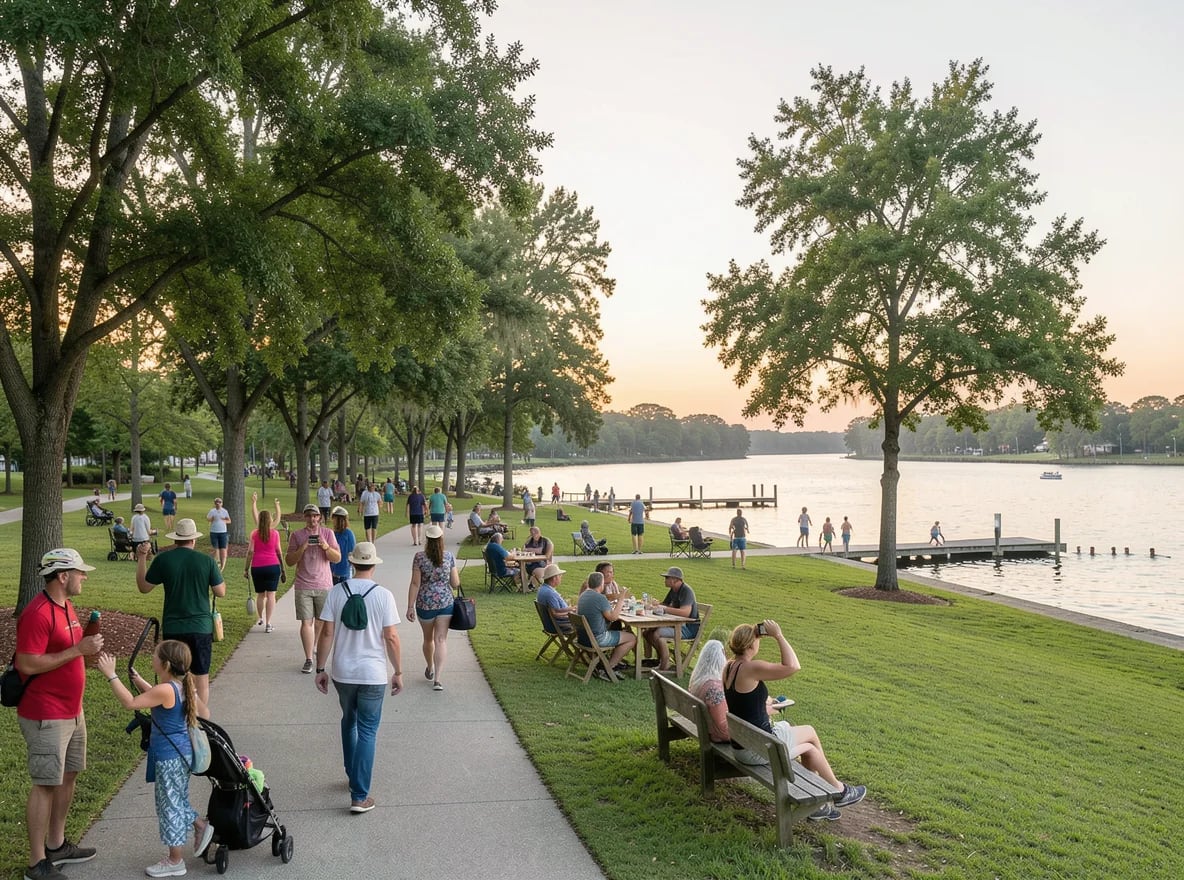
Jacksonville’s central neighborhoods put the New River, local parks, dining, and everyday services on the same map. This guide explores the area around the city center and offers practical ways to compare commutes, homes, and amenities before making a move.
Start near the New River
Jacksonville, North Carolina, has a city center shaped by the New River and its connections to the surrounding coastal plain. Around the central area, established streets, public spaces, local businesses, and civic destinations offer a useful starting point for exploring the city. A visit can reveal more than a listing description: notice how the streets connect, where you would run errands, and how the area feels at different times of day.
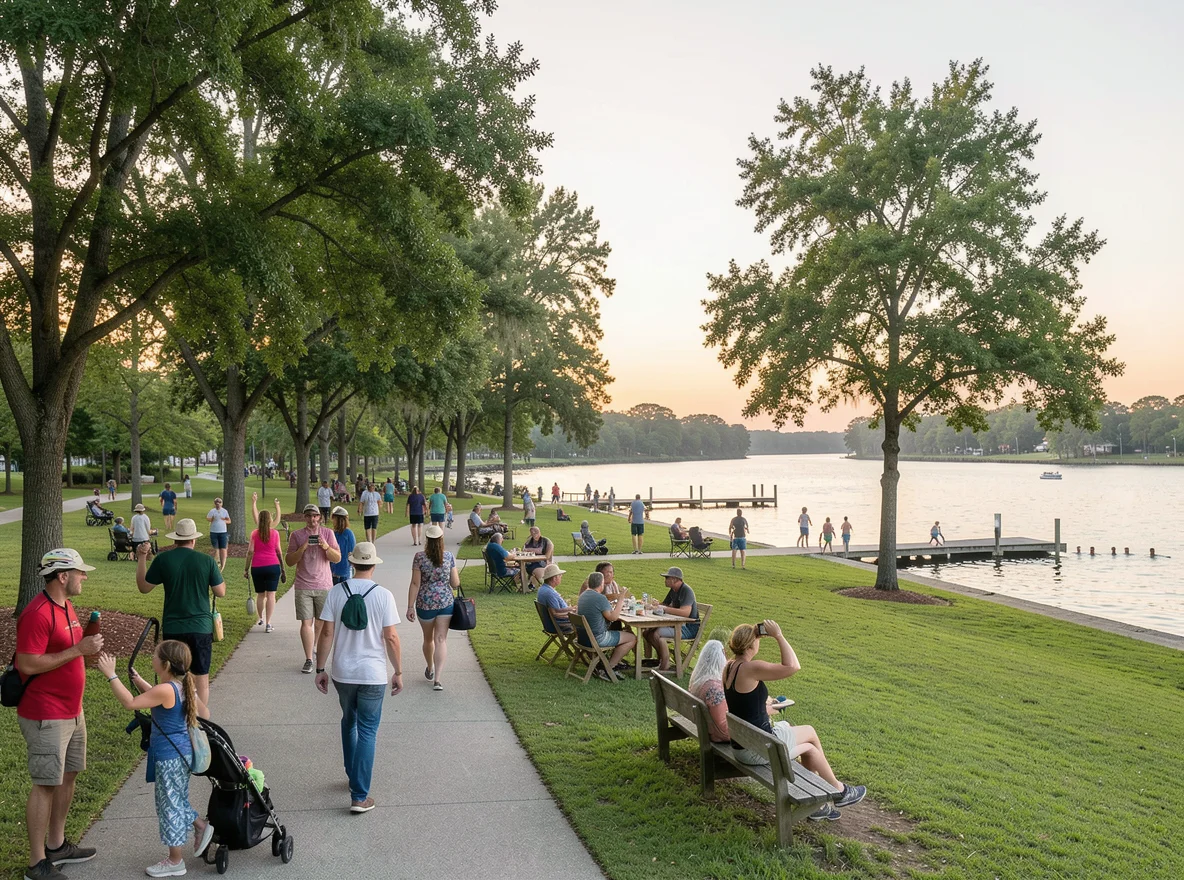
The waterfront is part of Jacksonville’s identity as well as a place to spend time outdoors. Riverwalk Park offers a setting for a walk near the water, while nearby Wilson Bay Park provides another place to enjoy green space. Sturgeon City adds an environmental education and community-event destination to the broader central area. Check current hours, events, and facilities before planning a visit, since programs and access can change.
Jacksonville’s history includes its development along the river and the lasting influence of nearby Marine Corps Base Camp Lejeune. That combination helps explain why the city has both a historic center and commercial corridors that extend beyond it. Rather than treating the city as one uniform neighborhood, compare individual streets and addresses: the setting around a home may differ considerably from the atmosphere a short drive away.
A map can show the distance to the river, but a visit reveals the route: check parking, crossings, and the actual path between a home and the public spaces you plan to use.
Spend a little time beyond the waterfront, too. Local dining options and everyday services are spread across Jacksonville, so proximity to a particular grocery store, appointment, or favorite place to eat depends on the address. Make a short list of the stops that matter to you and try combining them into an ordinary afternoon of errands.
Compare the commute from the actual address
Jacksonville’s road network connects the city center with residential areas, commercial destinations, and Camp Lejeune. U.S. 17 and N.C. 24 are useful reference points when studying a map, but a home’s location relative to an intersection or entrance can make a practical difference. A short distance on paper does not always translate to a predictable trip at the time you need to travel.
For a more useful comparison, map the route from each property to your regular destinations and test it during the hours you expect to travel. Consider school drop-offs, work schedules, appointments, and errands as applicable. If access to a military installation is part of your routine, verify the appropriate gate, access requirements, and operating information directly; those details can affect the route you choose.
What to check on a neighborhood visit
- Routes: Drive the main route and an alternative during a typical travel period.
- Daily stops: Locate groceries, health care, dining, and other services you use regularly.
- Walking conditions: Check sidewalks, crossings, lighting, and the specific route to your destination.
- School information: Confirm current assignments and transportation details with Onslow County Schools for the property address.
Conditions can change with roadwork, weather, and traffic, so consider a single test drive a starting point rather than a guarantee. If two homes are similar, comparing the full routine—not just the drive to one destination—can bring meaningful differences into focus.
Look beyond the listing photos
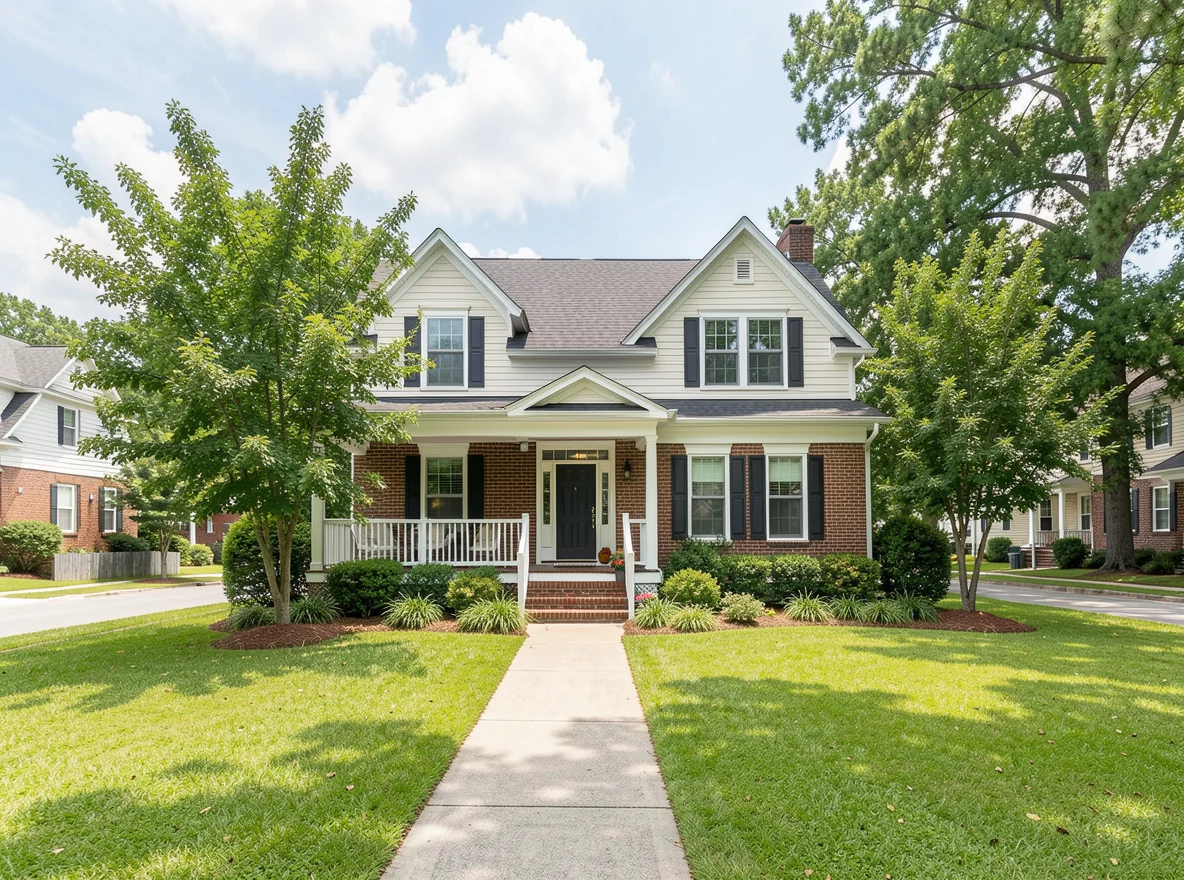
Homes in and around central Jacksonville can differ in age, layout, lot size, and the updates they have received. As you explore, look at how each property relates to its surroundings: the driveway, drainage, shade, outdoor space, and distance to nearby roads can all affect day-to-day use. Listing photos are helpful, but they rarely show every detail you may want to evaluate.
Ask about the age and condition of major systems, past improvements, and any available maintenance records. In a coastal North Carolina market, it is also sensible to investigate flood exposure and insurance costs for the specific property. Flood maps are one source of information, but coverage, premiums, and lender requirements should be confirmed with qualified professionals before you make decisions.
If a property is subject to a homeowners association, review its documents, fees, and rules as part of your due diligence. For any home, consider how the floor plan, storage, parking, and outdoor areas align with your intended use. An inspection can help you understand visible conditions and identify questions for further evaluation; it is not a substitute for reviewing the property’s disclosures and other records.
Compare the full cost of a home, not just its asking price: insurance, maintenance, taxes, and any association fees can change the monthly picture.
For sellers, the same property details matter when preparing to enter the market. Gather records for repairs and improvements, address maintenance issues where practical, and discuss comparable recent sales with a local real estate professional. Conditions and available inventory change, so a current property-specific review is more useful than assuming every home in the city will attract the same response.
Build a clearer picture of Jacksonville
A productive neighborhood search combines the appealing details with practical questions. Walk near the river, explore the central area, and take note of the places you might visit regularly. Then return to the addresses on your shortlist and compare their routes, property features, school information, and ongoing costs.
Whether you are researching a purchase or preparing to sell, local context can help you make sense of the options without relying on assumptions about an entire city. Hurst Realty can help you explore current listings and discuss the details that matter to your Jacksonville real estate plans.